I see systems
other people don't.
30 years across construction, defense, and AI. I find the gap between what exists and what should — then I build what should.
The pattern
I don't fix problems. I find the structural gap that makes the problem inevitable — and I build the system that makes it impossible.
In 2004, a construction company synchronized five binders by hand. I built a project management system. Their most profitable year.
In defense, six racks of camera equipment tracked one target at a time. I co-designed a half-rack system that coordinated slew-to-motion across overlapping fields of view. Full interoperability in 16 labor hours.
In AI, every agent framework reimplements context management. I didn't build a better one — I moved it outside the agent entirely. A hook layer the model doesn't know about. Stanford and MIT validated the category three months later.
Same pattern, every time: see the system, find the crack, move into it, build what should be there.
I'm not a developer or a product manager. I'm a systems builder who uses AI to ship at a speed that wasn't possible two years ago. I spec it. I architect it. I direct it. AI writes the code. The results are below.
The receipts
AI Gateway
Companies adopting AI have zero visibility into what's happening. Who asked what, which model answered, what it cost, did it leak PII. Commercial gateways charge $2K-20K/month. I built the same thing with open source — Traefik, Keycloak, LiteLLM, Langfuse — running on a laptop for $200/month in infrastructure.
Five layers: traffic management, identity (SSO with Entra ID), unified LLM routing (subscriptions, API keys, and local models through one gateway), full audit trail on every interaction, and content safety guardrails. Users set one environment variable and their workflow doesn't change — but every query is logged, every cost is tracked, every policy violation is flagged. Agents get the same identity and audit treatment as human employees.
Harness-Layer Context Engineering as External Nested Learning
LLMs are static after deployment — they can't form new memories. Behrouz et al. (NeurIPS 2025) showed that neural networks are hierarchies of associative memories operating at different timescales, and continual learning requires multi-frequency memory consolidation. We demonstrate that a harness layer outside the model can restore these properties externally — providing multi-timescale memory, surprise-driven refinement, and confidence-weighted knowledge consolidation without modifying model weights.
Five production systems across compliance, code assistance, and multi-agent coordination. Headline result: fine-tuning plateaus at 84% on a CMMC compliance benchmark; adding external context injection achieves 100% with zero additional training.
Toward a Periodic Table of Data Manifolds
We organized 21 data modalities by how well AI models transfer between them and discovered that data types cluster into six families — just like chemical elements. Two numbers explain 69% of the variation. The gaps in the table predict where undiscovered data types should exist, and four registered predictions are falsifiable on consumer hardware.
The table lets ML teams pick the right pre-trained model in minutes instead of weeks, predict scaling returns before committing budget, and identify where research investment will pay off.
DevPlan MCP Server
AI coding assistants lose context between sessions, skip steps, and produce inconsistent code. DevPlan fixes this with structured planning — it interviews you, generates a validated plan, then hands off to AI for mechanical execution while a separate verifier tries to break the result. Issues found during verification become lessons that improve future projects.
Open source, MIT licensed, runs on Cloudflare Workers.
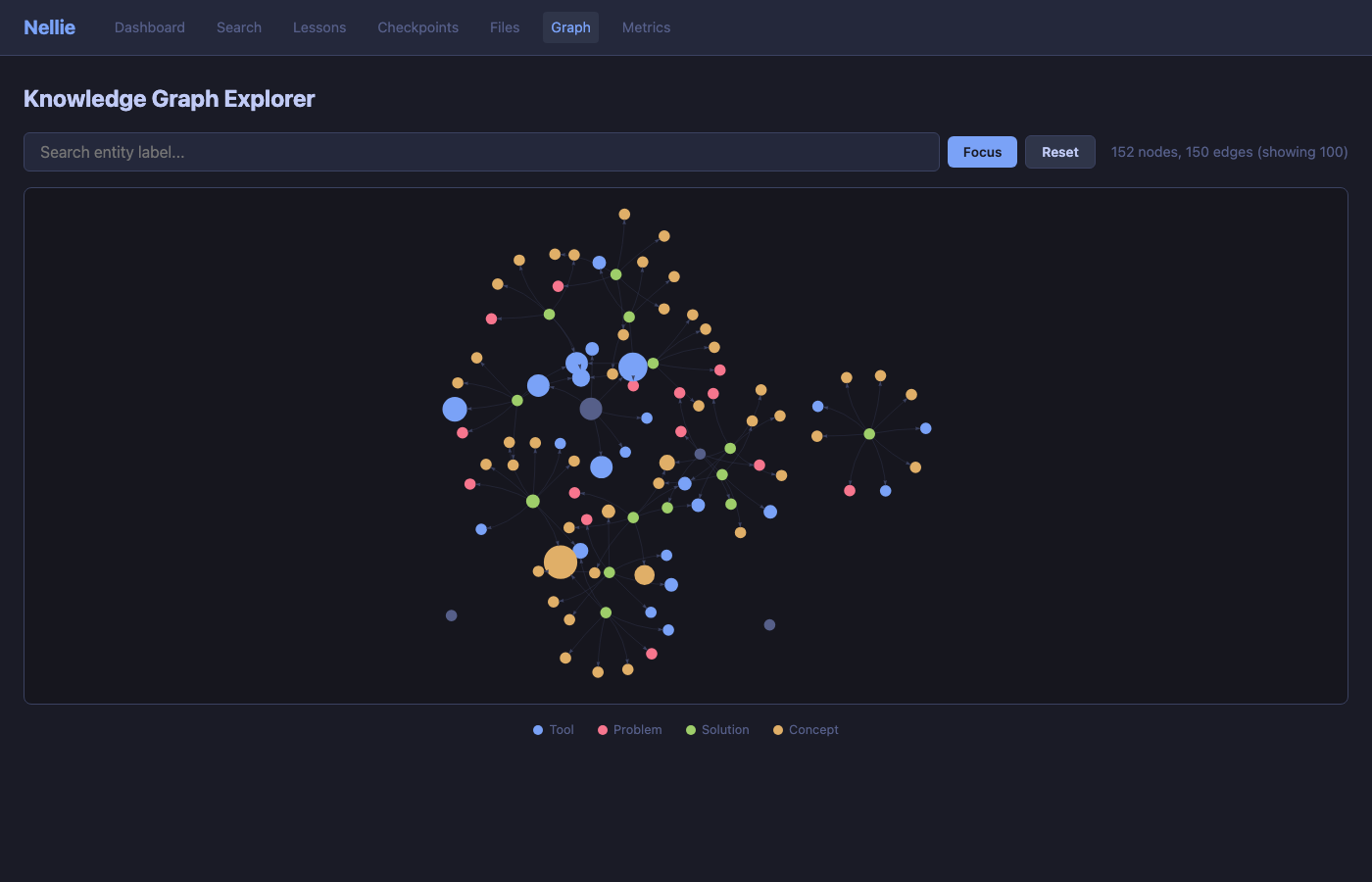
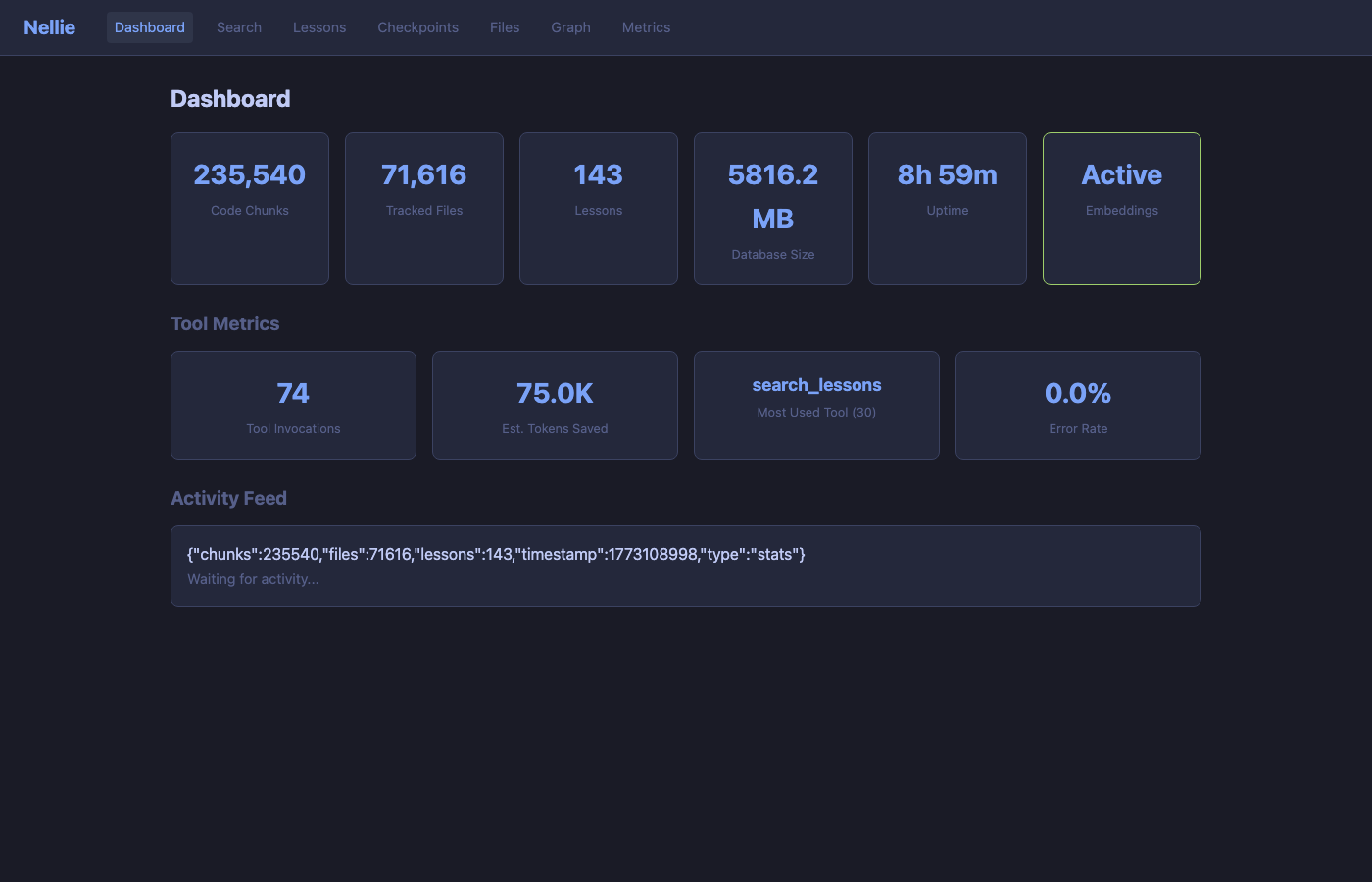
Nellie
AI agents forget everything between sessions, and every framework reimplements its own context fix. Nellie takes a different path — hook-based context engineering middleware that runs outside the agent, at Claude Code's harness layer. The model doesn't know it's been augmented. The hook curates context, the augmented prompt reaches the model, and reasoning stays cleanly separated from curation.
That separation unlocks universal applicability across models and subagents, clean replaceability, and auditability at the trust boundary — the right shape for CUI-handling, CMMC, and FedRAMP work. Built in Rust, with persistent memory via amp-rs underneath. v0.5.3 installs in two lines.
More projects
MESH Protocol
Memory Exchange & Sharing Hub — a secure federation protocol for AMP nodes. Share agent memory across teams without giving up control of your data.
Praxis
A system for turning dense documentation into expert systems that learn. Three layers: foundation docs, institutional knowledge, and an AMP-powered refinement loop that compounds with every correction.
Frank is a Bay Area realtor. A buyer calls — wants to see a property in Oakland in an hour. Frank calls the office: "dump the disclosures for 4th Street into Praxis." By the time he pulls up, he's got rent control status, soft-story retrofit requirements, lead paint obligations, and every city-specific disclosure at his fingertips.
Latest
How I Built Context Management That's Better Than the Frontier Products I built intelligent context compaction with persistent memory, adaptive RAG, and crash recovery — running on a self-hosted Qwen 3.6 on a Mac Mini. No cloud. No API costs. No data leaving the building. The Table Saw Argument AI assistance is not a crutch — it is a force multiplier for a thoughtful engineer. Nobody asks a carpenter if they cut the wood by hand. I Built an Enterprise AI Gateway From My Phone No laptop. No IDE. No terminal. Just Telegram messages to two AI agents. The abstraction layer between intent and implementation got thin enough that a phone keyboard is a sufficient development environment. Your AI Doesn't Have Amnesia. You Just Haven't Built It a Hippocampus. LLMs can't form new memories after deployment. The brain solved this with a separate memory system. We built the same thing — externally — and beat fine-tuning on a compliance benchmark. Building an Open Source AI Gateway: Full Visibility, Zero Vendor Lock-In Companies adopting AI have zero visibility. Commercial gateways charge $2K-20K/month. I built the same thing with open source, running on a laptop, for $200/month. Why a Periodic Table of Data Matters We organized 21 data modalities by how well AI models transfer between them — and discovered that data types cluster into six families, just like chemical elements. Labeling Existing SharePoint Documents at Rest with File Extension Matching The free, undocumented path to retroactively labeling everything in SharePoint and OneDrive — and the Purview dashboard gotcha that makes everyone give up on it.Let's build
You have a problem that looks like a dozen smaller problems. I see the one system that makes all of them go away. If you need someone who sees the bigger picture — not a ticket-taker, a systems thinker — let's talk.